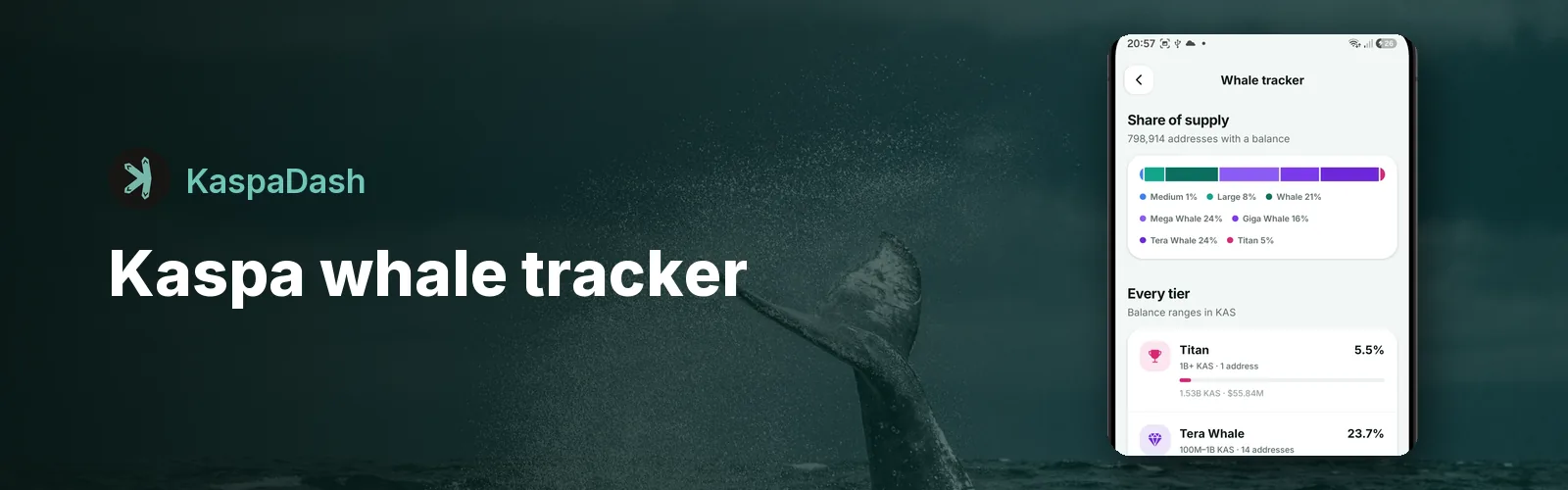
Who actually holds Kaspa? A Kaspa whale tracker answers it by sorting every address with a balance into tiers, showing how much of the supply sits with the biggest holders and how much is spread across everyday wallets.
Kaspa wallet tiers explained
KaspaDash groups addresses by balance, with each tier ten times bigger than the last:
- Dust: under 1 KAS
- Micro: 1 to 10 KAS
- Tiny: 10 to 100 KAS
- Small: 100 to 1,000 KAS
- Medium: 1,000 to 10,000 KAS
- Large: 10,000 to 100,000 KAS
- Whale: 100,000 to 1 million KAS
- Mega Whale: 1 million to 10 million KAS
- Giga Whale: 10 million to 100 million KAS
- Tera Whale: 100 million to 1 billion KAS
- Titan: 1 billion KAS and up
Using the whale tracker
- Open KaspaDash and go to Whale tracker.
- The Share of supply bar shows what percentage of all KAS each tier holds.
- Scroll through Every tier to see how many addresses are in each one and their combined value.
- Look up any address to see which tier it's in, then add it to your watchlist.

KaspaDash: free Kaspa dashboard for Android
Live KAS price and charts, a real-time block explorer, a wallet watchlist, the whale tracker, supply and reward countdown, and every KRC-20 token. No account and no wallet connection needed.
Download Free on Google PlayReading whale data carefully
An address isn't a person. The largest addresses are often exchanges, custodians or project funds holding coins for many users, so a high whale share doesn't automatically mean a few individuals own most of the supply. One person can also spread holdings over many small addresses. Use tier data to watch trends, such as whether more KAS is moving into or out of the biggest wallets over time, rather than as a precise headcount.